What Does It Mean That Christ is the Second Adam?
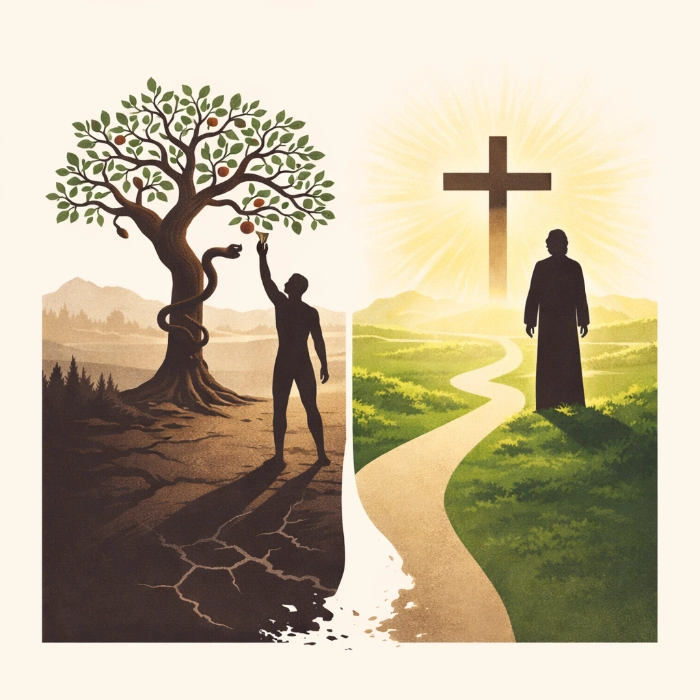
Christ as the Second Adam (Covenant Theology Explained)
One of the most powerful and unifying doctrines in Scripture is the truth that Jesus Christ is the Second Adam. In Reformed covenant theology, this concept is essential for understanding both the fall of humanity and the redemption accomplished through the gospel. The biblical teaching of Christ as the Second Adam reveals how God restores what was lost through Adam by establishing a new representative head who succeeds where the first failed.
To understand this doctrine, we must begin with Adam’s role. As previously established, Adam was created as the federal head of humanity under the covenant of works. His obedience would have secured life, but his disobedience brought sin and death into the world. Because Adam stood as a representative, his failure affected all humanity. This is why Scripture teaches that all people are born in sin and under condemnation.
The apostle Paul makes this connection explicit in Romans 5, one of the most important passages for understanding federal headship in the Bible. In Romans 5:18–19, Paul writes that “as one trespass led to condemnation for all men, so one act of righteousness leads to justification and life for all men.” Here we see a direct comparison between Adam and Christ. Adam’s disobedience brought judgment, while Christ’s obedience brings salvation. This parallel is the foundation of the doctrine of Adam vs Christ in Romans 5 explained through covenant theology.
Christ is called the “Second Adam” or “last Adam” because He fulfills the role that Adam failed to carry out. Where Adam was placed in a perfect environment and fell, Christ entered a fallen world and remained perfectly obedient. He resisted temptation, fulfilled the law of God, and lived a life of complete righteousness. This obedience is not merely an example for believers—it is a substitution. Christ obeyed on behalf of His people as their covenant representative.
This brings us to the heart of the gospel: imputation of sin and righteousness. In Reformed theology, salvation is understood through this covenantal exchange. Adam’s sin is imputed to humanity, meaning his guilt is counted as ours. In the same way, Christ’s righteousness is imputed to believers. His perfect obedience is credited to those who are united to Him by faith. Without this doctrine, the gospel loses its coherence. The same representative principle that brings condemnation through Adam brings justification through Christ.
The importance of Christ as the Second Adam is also emphasized in 1 Corinthians 15:21–22, where Paul writes, “For as by a man came death, by a man has come also the resurrection of the dead.” He goes on to say, “For as in Adam all die, so also in Christ shall all be made alive.” This passage highlights the two realms of existence: being “in Adam” or being “in Christ.” Every person belongs to one of these two covenant heads. There is no neutral ground.
From a covenant theology perspective, this doctrine reveals the unity of God’s redemptive plan. The story of the Bible is not fragmented but structured around these two representative figures. Adam represents the old creation marked by sin and death, while Christ represents the new creation characterized by righteousness and life. Through Christ, God is not merely repairing what was broken but establishing something greater—a redeemed humanity secured forever in covenant relationship with Him.
Another important aspect of this doctrine is Christ’s active and passive obedience. His active obedience refers to His perfect fulfillment of God’s law throughout His life. His passive obedience refers to His willing submission to suffering and death on the cross. Both are necessary for salvation. Christ not only pays the penalty for sin but also fulfills the righteousness required under the covenant. This is why believers are declared righteous—not because of their own works, but because of Christ’s completed work as the Second Adam.
Understanding Christ as the Second Adam also has profound practical implications. It provides assurance of salvation. If our standing before God depended on our own obedience, we would have no hope. But because Christ has fulfilled the covenant perfectly, believers can rest in His righteousness. This truth also produces humility and gratitude, reminding us that salvation is entirely a work of grace.
Furthermore, this doctrine calls believers to live in light of their new identity. Those who are united to Christ are no longer defined by Adam’s failure but by Christ’s victory. This means that the power of sin has been broken, and believers are called to walk in newness of life. While the presence of sin remains, its dominion has been defeated through the work of the Second Adam.
In summary, the doctrine of Christ as the Second Adam is central to Reformed covenant theology and essential for understanding the gospel. It explains how redemption is accomplished through a representative who succeeds where Adam failed. Through His obedience, death, and resurrection, Christ brings life, righteousness, and restoration to all who are united to Him. By seeing this covenantal structure in Scripture, believers gain a deeper appreciation for the grace of God and the completeness of salvation found in Jesus Christ.