The Covenant of Works Explained: Adam, Federal Headship, and Redemption
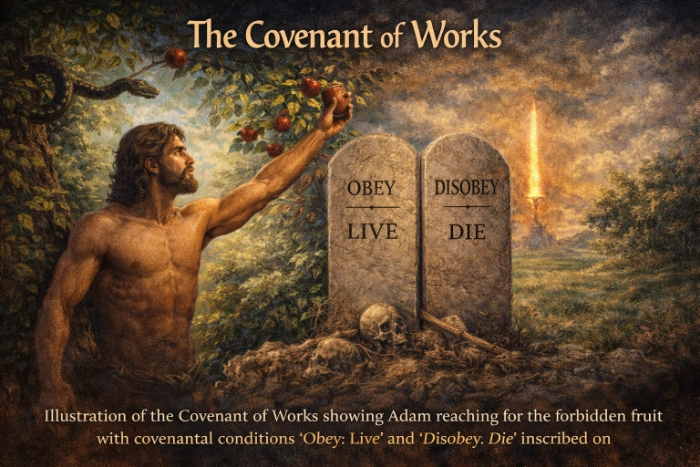
The doctrine of the covenant of works is an essential component of Reformed covenant theology because it helps explain humanity’s original relationship with God and the reason redemption is necessary. Although the specific phrase “covenant of works” does not appear explicitly in Scripture, the concept arises from the biblical description of Adam’s role in the Garden of Eden and the conditions attached to his obedience. Understanding this covenant provides a theological foundation for grasping both the fall of humanity and the saving work of Jesus Christ.
According to the Reformed understanding, the covenant of works describes the arrangement established by God with Adam before the entrance of sin into the world. Adam was created upright and placed in a state of innocence, endowed with the ability to obey God perfectly. In Genesis 2:16–17, God commanded Adam not to eat from the tree of the knowledge of good and evil, warning that disobedience would result in death. This command was not merely a test of personal devotion but part of a representative covenantal structure. Adam stood as the federal head of the human race, meaning that his actions would affect not only himself but all his descendants.
The covenantal nature of this arrangement can be seen in several elements. First, there was a divine command that required obedience. Second, there was a promise implied in the command. While Scripture explicitly mentions the penalty of death for disobedience, the broader biblical witness suggests that obedience would have led to confirmed life and blessing. The presence of the tree of life in the garden symbolizes the potential for continued life in communion with God. Third, Adam’s representative role indicates that his obedience or disobedience would have covenantal consequences for humanity as a whole.
The apostle Paul later interprets Adam’s role in explicitly covenantal terms. In Romans 5:12–19, Paul explains that sin and death entered the world through one man and spread to all because all sinned in him. This passage highlights the principle of federal headship, in which Adam acted as the representative of humanity. His failure brought condemnation and corruption to the human race. Similarly, in 1 Corinthians 15:21–22, Paul contrasts Adam and Christ, stating that “as in Adam all die, so also in Christ shall all be made alive.” This parallel supports the covenantal framework by showing that just as Adam’s disobedience had real consequences for those he represented, Christ’s obedience brings life to those united to Him.
From a Reformed perspective, the covenant of works underscores the seriousness of sin and the justice of God. Humanity’s fallen condition is not simply the result of individual moral failures but flows from the representative disobedience of Adam. This helps explain why death and corruption affect all people universally. It also demonstrates that salvation must come through another representative who can fulfill the covenantal requirements that Adam failed to meet.
This doctrine also highlights the goodness of God’s original creation. The covenant of works was not an oppressive arrangement but a gracious provision that offered humanity the opportunity to enjoy confirmed life in fellowship with God. Adam was created with the capacity to obey and was placed in a garden filled with provision and blessing. The covenantal command served as a means of testing loyalty and establishing a righteous order in which humanity would live under God’s authority.
Furthermore, understanding the covenant of works clarifies the necessity of Christ’s active and passive obedience. Jesus did not merely come to suffer the penalty of sin but also to fulfill the righteous requirements of the law on behalf of His people. Where Adam failed, Christ succeeded. His perfect obedience throughout His life and His atoning death on the cross together accomplish the redemption of those who are united to Him by faith. This is why Paul describes Christ as the “last Adam,” who reverses the curse brought about by the first.
The covenant of works also has practical implications for Christian theology and spiritual life. It reminds believers that salvation is entirely grounded in the work of Christ rather than in human effort. Since humanity’s fall occurred through covenantal disobedience, restoration must come through covenantal obedience fulfilled by another. This truth fosters humility, gratitude, and confidence in the sufficiency of Christ’s righteousness.
In addition, this doctrine contributes to a unified understanding of Scripture. It shows how the themes of creation, fall, and redemption are interconnected within God’s overarching covenantal plan. The covenant of works establishes the context in which the covenant of grace unfolds. Without recognizing Adam’s representative role and failure, the significance of Christ’s redemptive work cannot be fully appreciated.
In summary, the covenant of works is a foundational biblical doctrine that explains humanity’s original relationship with God, the reason for the universal effects of sin, and the necessity of Christ’s saving obedience. By understanding this covenant within the broader framework of Reformed theology, believers gain a deeper appreciation for the justice of God, the gravity of the fall, and the glory of redemption accomplished through Jesus Christ.