The Covenant of Redemption Explained
The Covenant of Redemption Explained
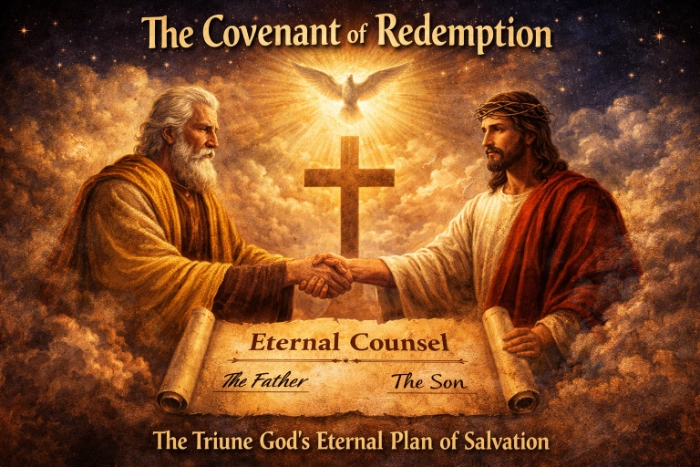
One of the most profound and foundational concepts in Reformed covenant theology is the covenant of redemption. Though the term itself does not appear explicitly in Scripture, the doctrine arises from a careful synthesis of biblical teaching concerning God’s eternal plan to save sinners. The covenant of redemption refers to the eternal agreement within the Trinity in which the Father appointed the Son to accomplish the salvation of His people, and the Son willingly undertook this mission, empowered and applied by the Holy Spirit.
This doctrine emphasizes that salvation is not an afterthought in response to human sin, but part of God’s sovereign and eternal purpose. Before the creation of the world, God determined to glorify Himself through the redemption of a people. The covenant of redemption highlights the unity of the Father, Son, and Spirit in this saving plan and provides a theological foundation for understanding the certainty and effectiveness of Christ’s work.
Several passages in Scripture point to this eternal purpose. In Ephesians 1:3–5, the apostle Paul teaches that believers were chosen in Christ before the foundation of the world and predestined for adoption according to the purpose of God’s will. Similarly, in 2 Timothy 1:9, salvation is described as flowing from God’s grace given in Christ Jesus before the ages began. These texts reveal that redemption originates not in human initiative but in the eternal counsel of God.
The covenant of redemption also helps explain the language Jesus uses in His earthly ministry. In John 6:37–40, Christ speaks of those whom the Father has given Him and declares His commitment to accomplish their salvation and raise them up on the last day. This giving of a people by the Father to the Son suggests an eternal arrangement in which the Son acts as the appointed mediator and redeemer. Likewise, in John 17, Jesus prays concerning the work He has been sent to accomplish and the authority given to Him over all flesh to grant eternal life to those entrusted to Him.
From a Reformed perspective, this covenant establishes Christ as the federal head of the redeemed. Just as Adam represented humanity in the covenant of works and brought condemnation through his disobedience, Christ represents His people and secures righteousness and life through His obedience. Romans 5:18–19 highlights this parallel, teaching that the obedience of one man leads to justification and life for many. The covenant of redemption therefore provides the theological grounding for understanding why Christ’s work is both substitutionary and effective.
Another important aspect of this doctrine is the voluntary obedience of the Son. While the Father appoints and sends, the Son willingly submits to the mission of redemption. Passages such as Philippians 2:6–8 portray Christ’s humility in taking on human nature and becoming obedient to the point of death, even death on a cross. This obedience is not coerced but arises from the perfect unity of will within the Trinity. The Son delights to do the Father’s will, and through His faithful obedience He fulfills the covenantal requirements necessary for the salvation of His people.
The role of the Holy Spirit is also essential in the covenant of redemption. The Spirit applies the benefits of Christ’s work to believers, regenerating hearts, granting faith, and preserving them in salvation. Titus 3:5–6 describes salvation as the washing of regeneration and renewal by the Holy Spirit, poured out through Jesus Christ. In this way, redemption is not merely accomplished in history but continually applied through the Spirit’s ministry in the lives of God’s people.
Understanding the covenant of redemption has profound pastoral implications. It provides believers with deep assurance that their salvation rests on God’s eternal purpose rather than on fluctuating human performance. If redemption originates in the eternal counsel of the Trinity and is accomplished by the finished work of Christ, then it cannot ultimately fail. This doctrine strengthens confidence in the perseverance of the saints and encourages worship rooted in gratitude for sovereign grace.
Furthermore, the covenant of redemption underscores the centrality of Christ in all of Scripture. The entire narrative of the Bible unfolds as the historical outworking of this eternal plan. The promises given after the fall, the covenantal developments throughout the Old Testament, and the inauguration of the new covenant all find their ultimate meaning in the mission of the Son to redeem His people. By viewing redemption through this covenantal lens, believers gain a clearer understanding of the unity and coherence of God’s saving work.
In summary, the covenant of redemption is a vital component of Reformed covenant theology. It teaches that the salvation of sinners originates in the eternal agreement of the triune God, is accomplished through the obedient life and atoning death of Christ, and is applied by the regenerating power of the Holy Spirit. This doctrine magnifies God’s sovereignty, highlights the sufficiency of Christ’s work, and offers believers enduring assurance as they rest in the faithfulness of God’s eternal covenant purpose.